Services e-commerce — professional shoe care · 2024
Extrim
Letting customers book shoe repairs without knowing what a 'welt' is.
- Client
- Stradex Vietnam (owned product)
- Role
- UI/UX Designer
- Outcome
- +80% conversion rate · +50% lead generation
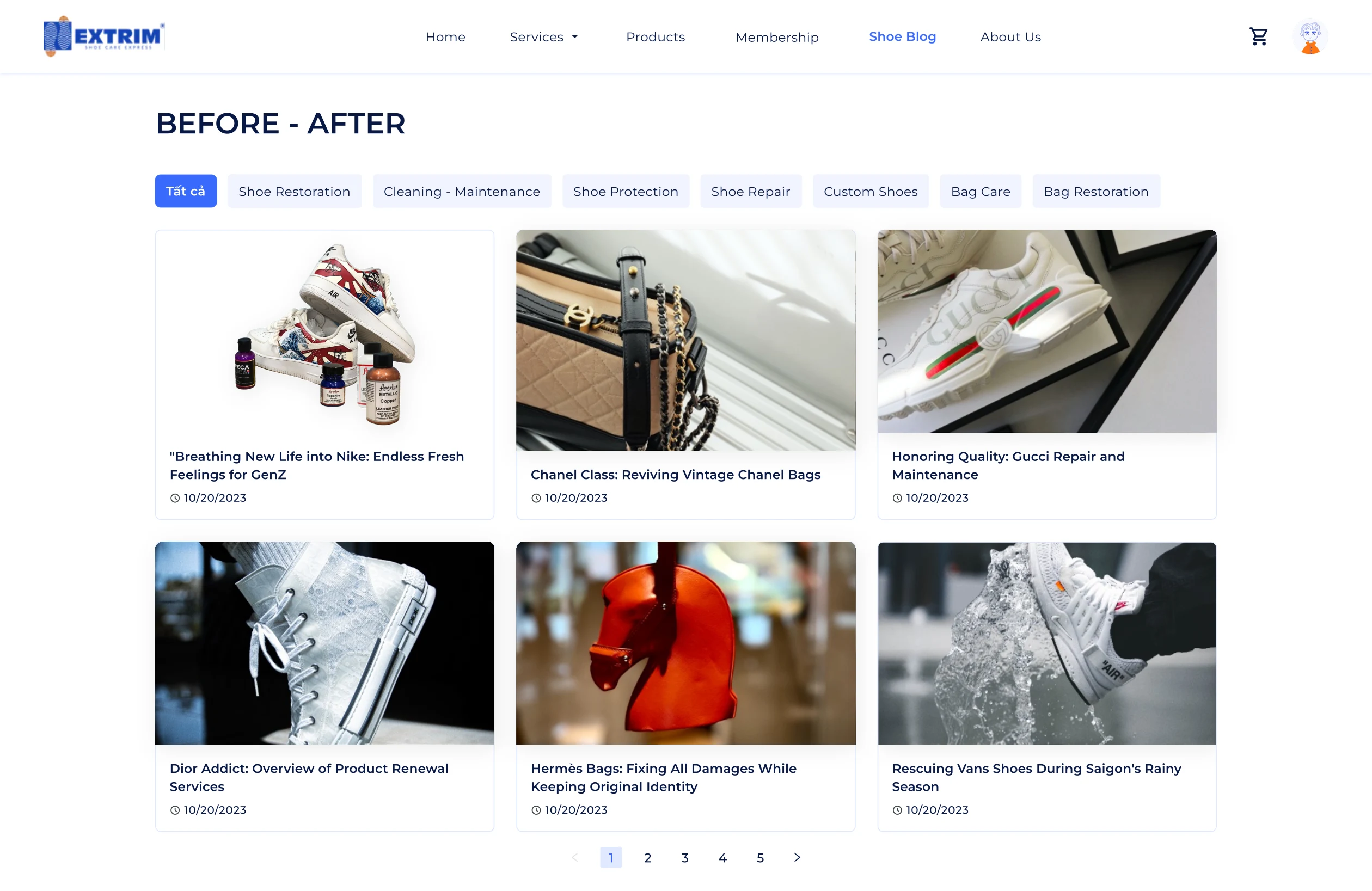
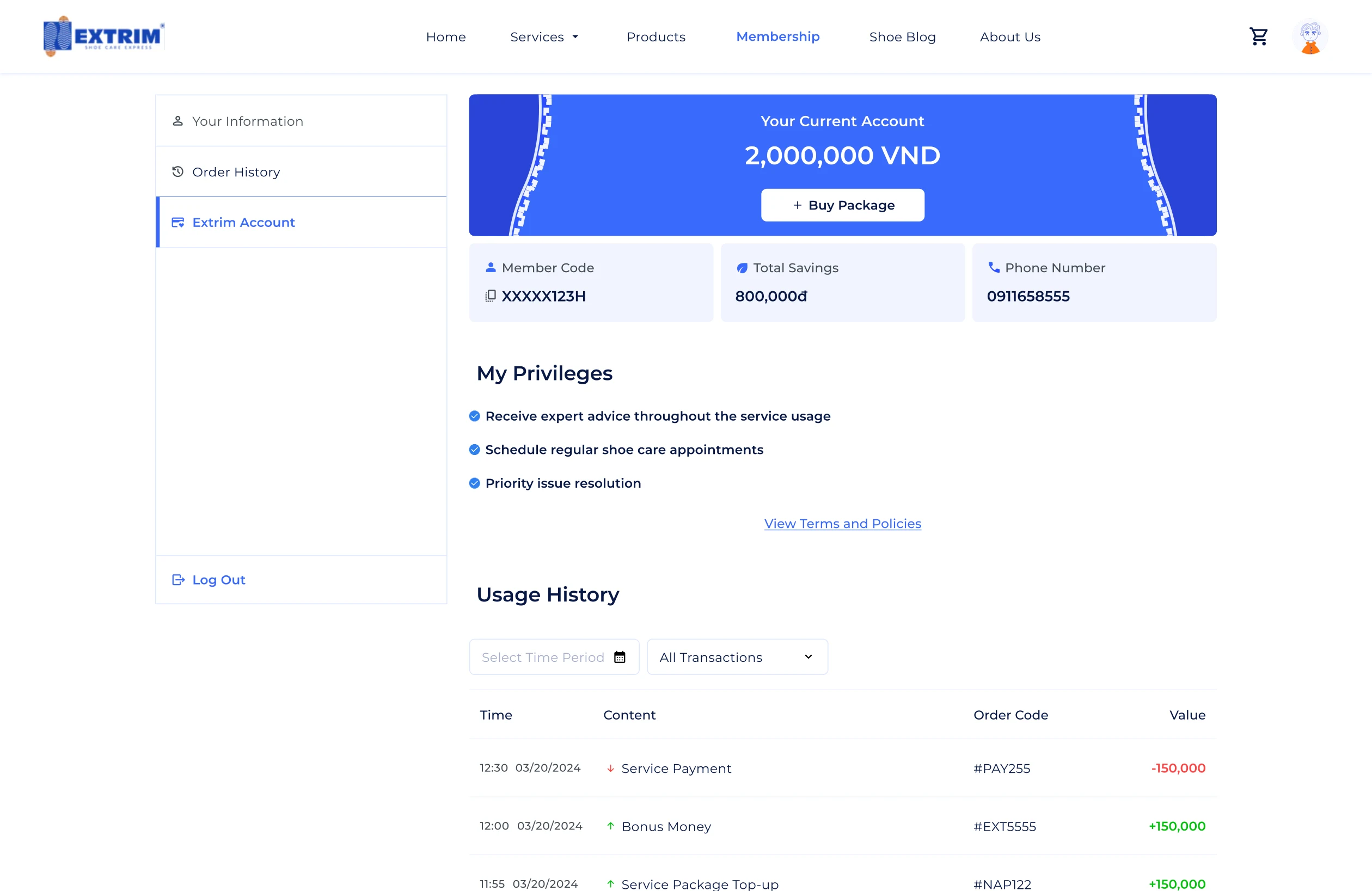
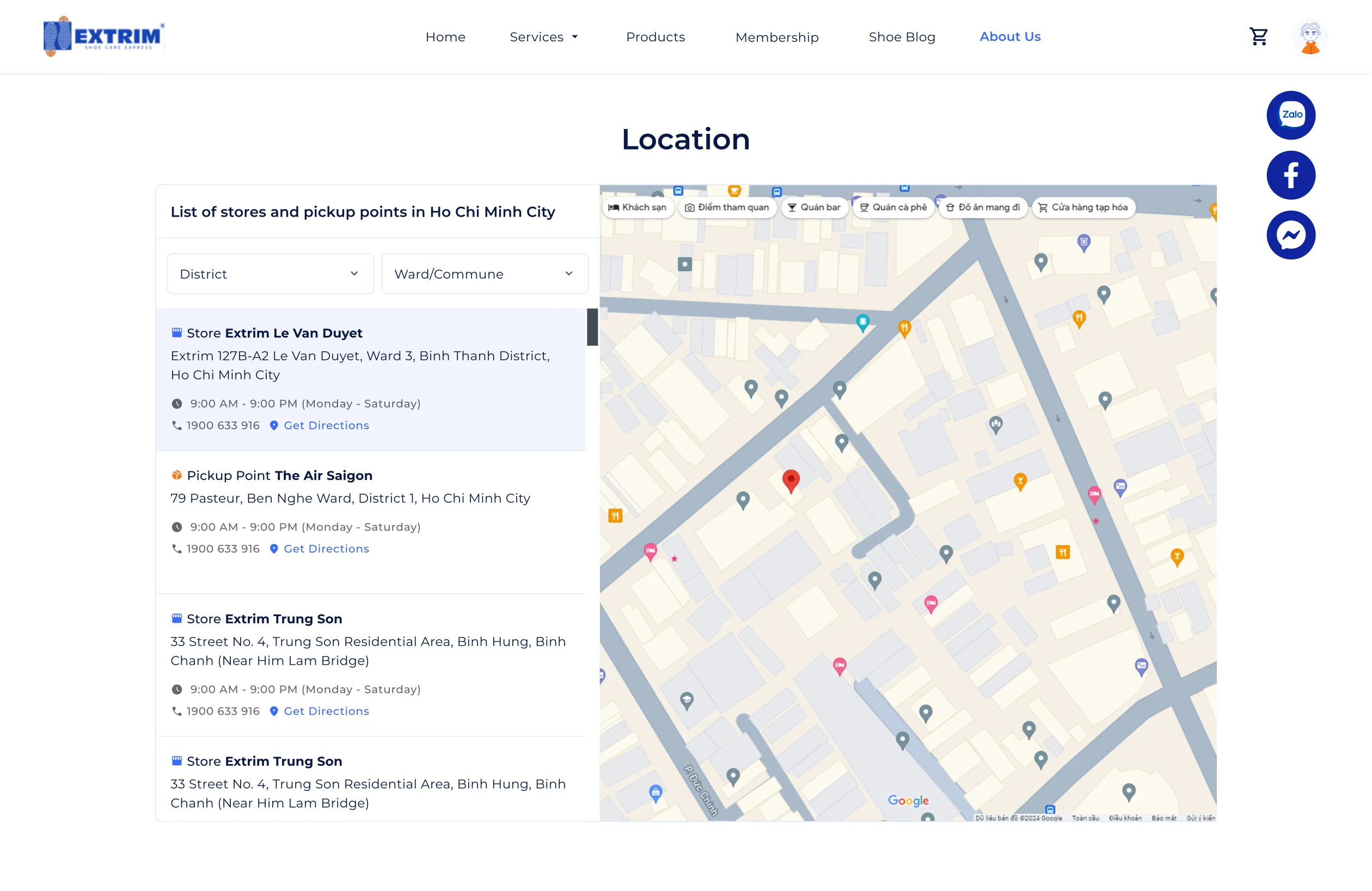
Context
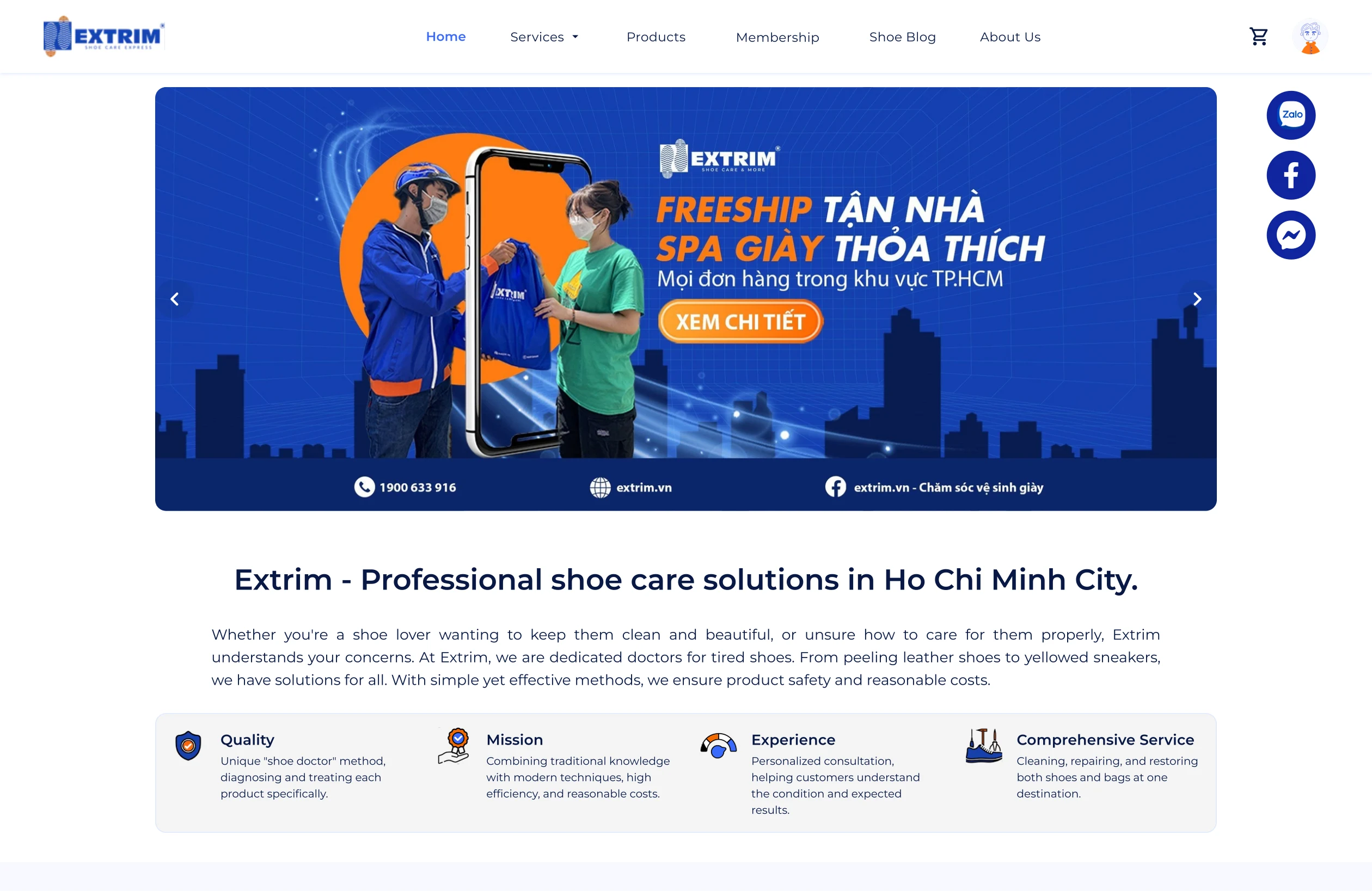
Extrim is a Stradex-owned, web-only platform connected to a chain of professional shoe-care branches in Ho Chi Minh City. Customers can book cleaning and repair services, arrange pickup and return, manage orders, and pay through an account-based balance.
As the sole/lead Product Designer, I redesigned most pages and features of the live site and designed new systems including its top-up account. The work had to connect a digital ordering journey with a service completed through physical branches.
Reframing
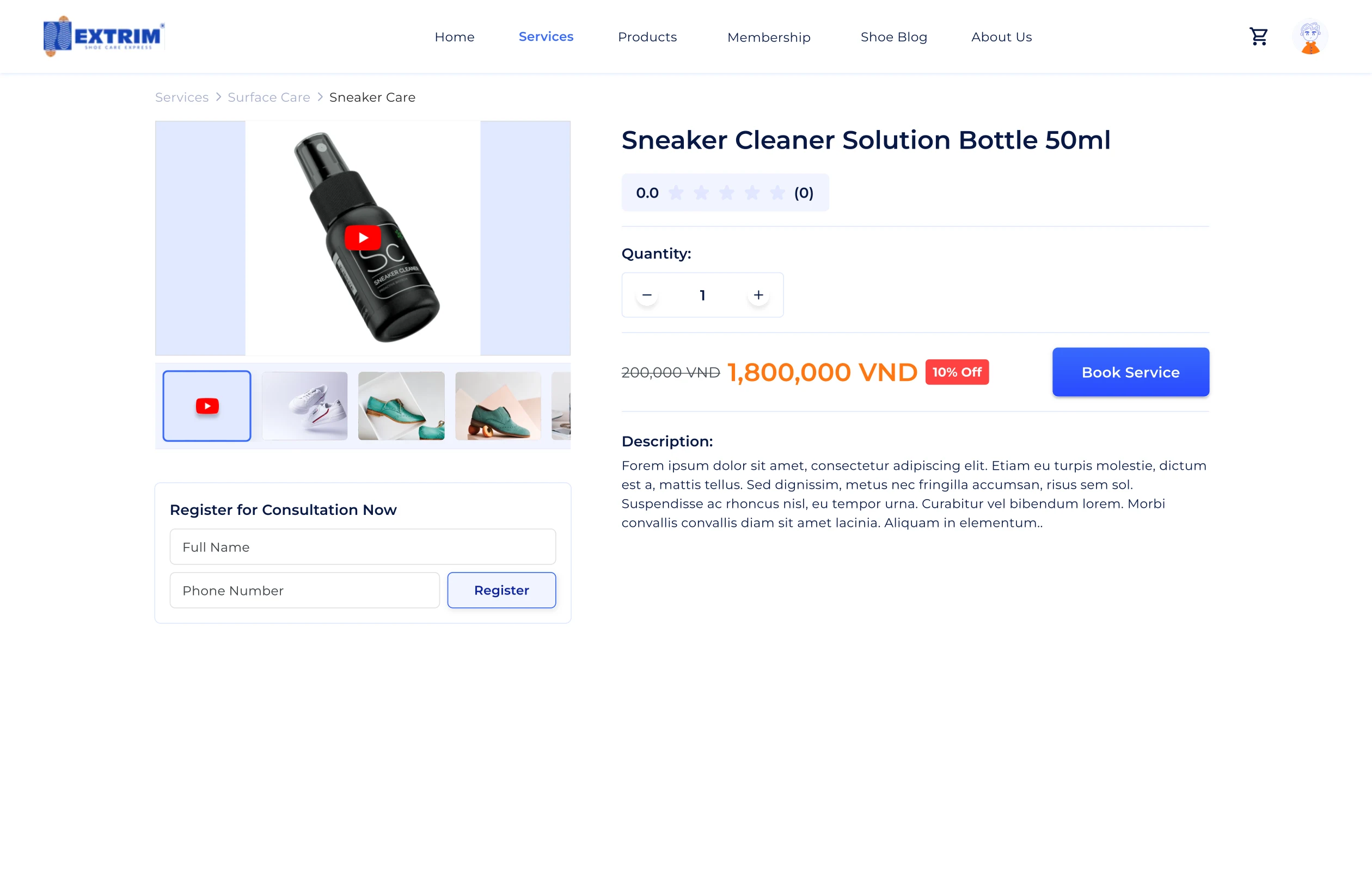
The original repair flow asked customers to choose technical shoe parts—sole, welt, vamp, eyestay—from a dropdown. The interface assumed specialist vocabulary before a customer could describe a familiar physical problem.
Customers don't book by the name of a shoe part. They point at where their shoe is broken.
That observation changed the task from explaining terminology to matching how customers already recognised damage: by location.
Decisions
Let customers point to the damage
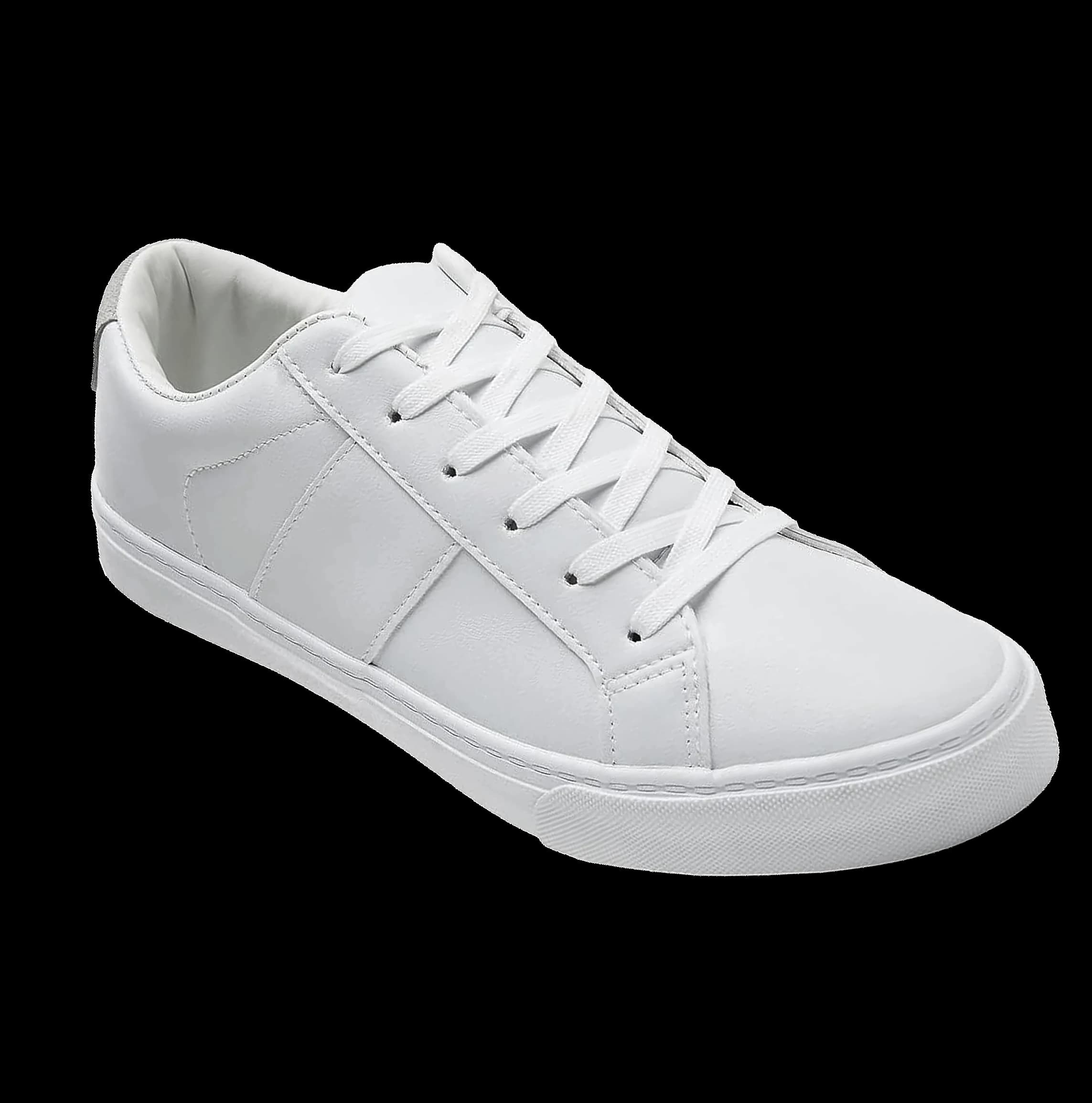
I replaced the terminology-first dropdown with a diagram of a real shoe. Tappable hotspots let customers select the damaged area and reveal repair services relevant to that location.
The visual model required more illustration and front-end work, but removed specialist vocabulary from the primary booking decision.
Connect prepaid value to repeat service
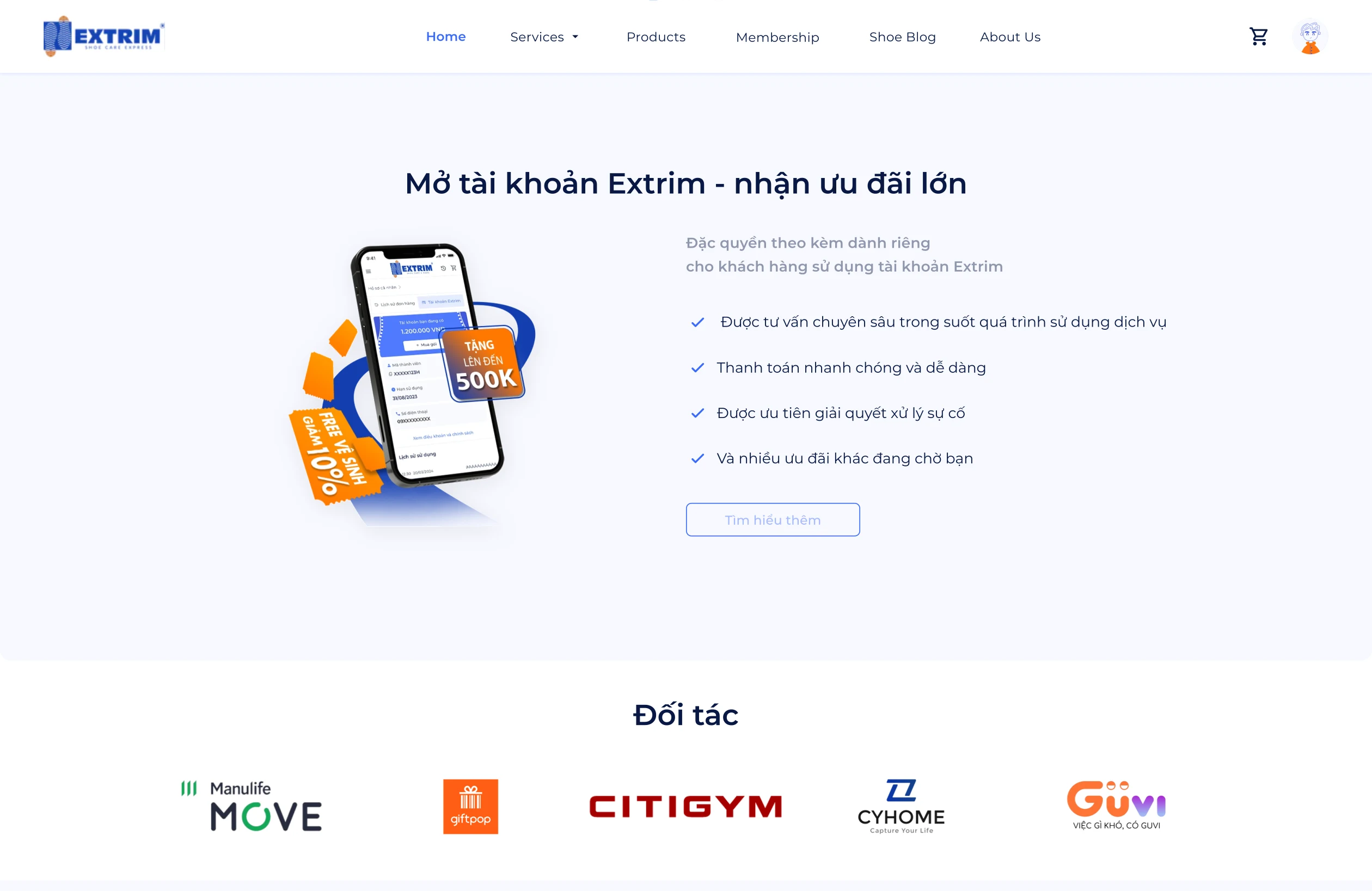
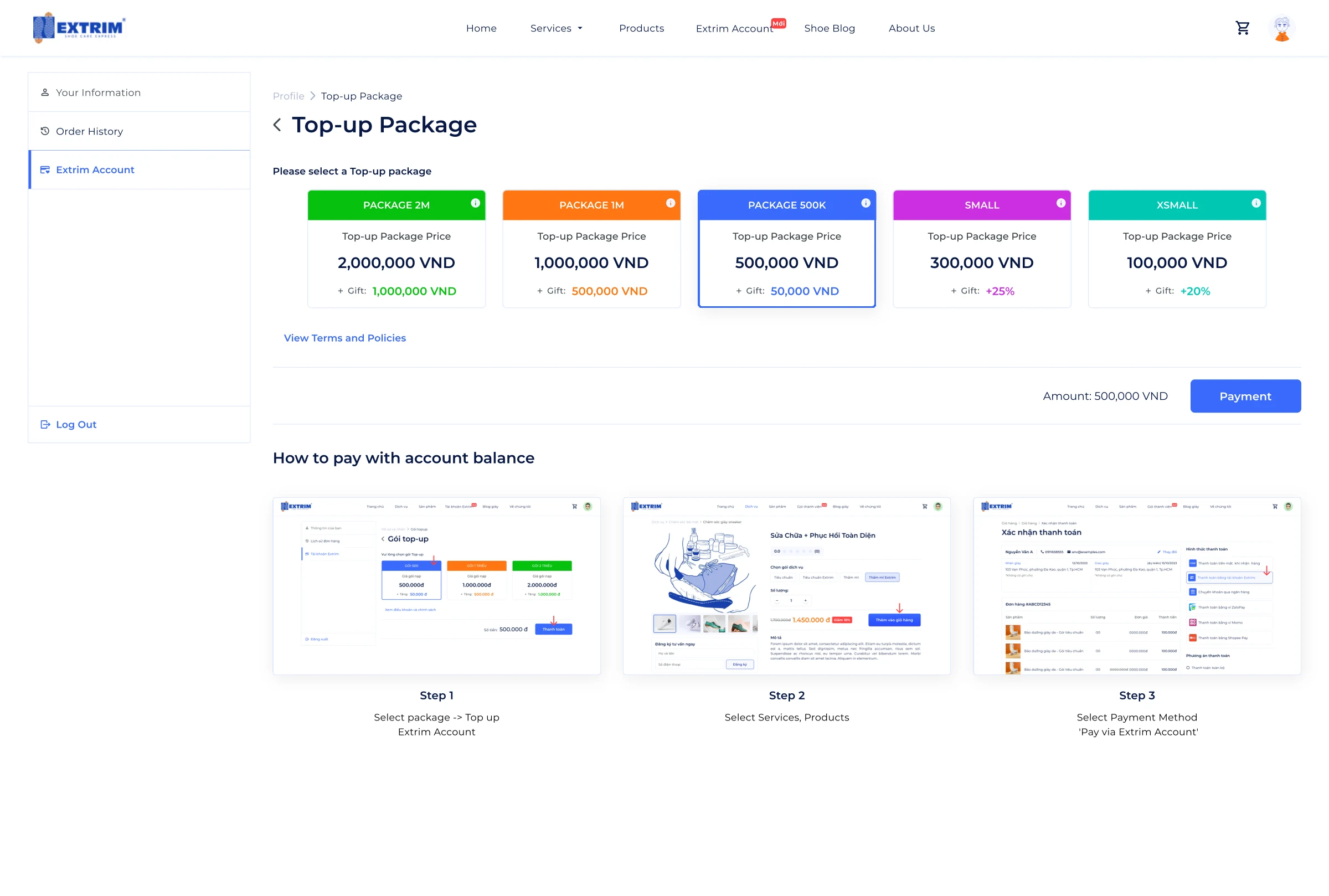
I designed an account-based wallet where customers could preload balance and receive promotions or discounts tied to top-ups. The familiar prepaid-card model connected repeat visits with a more predictable payment relationship.
The wallet added a concept to a service website, and its individual effect was not measured separately from the wider redesign.
Keep fulfilment inside the booking
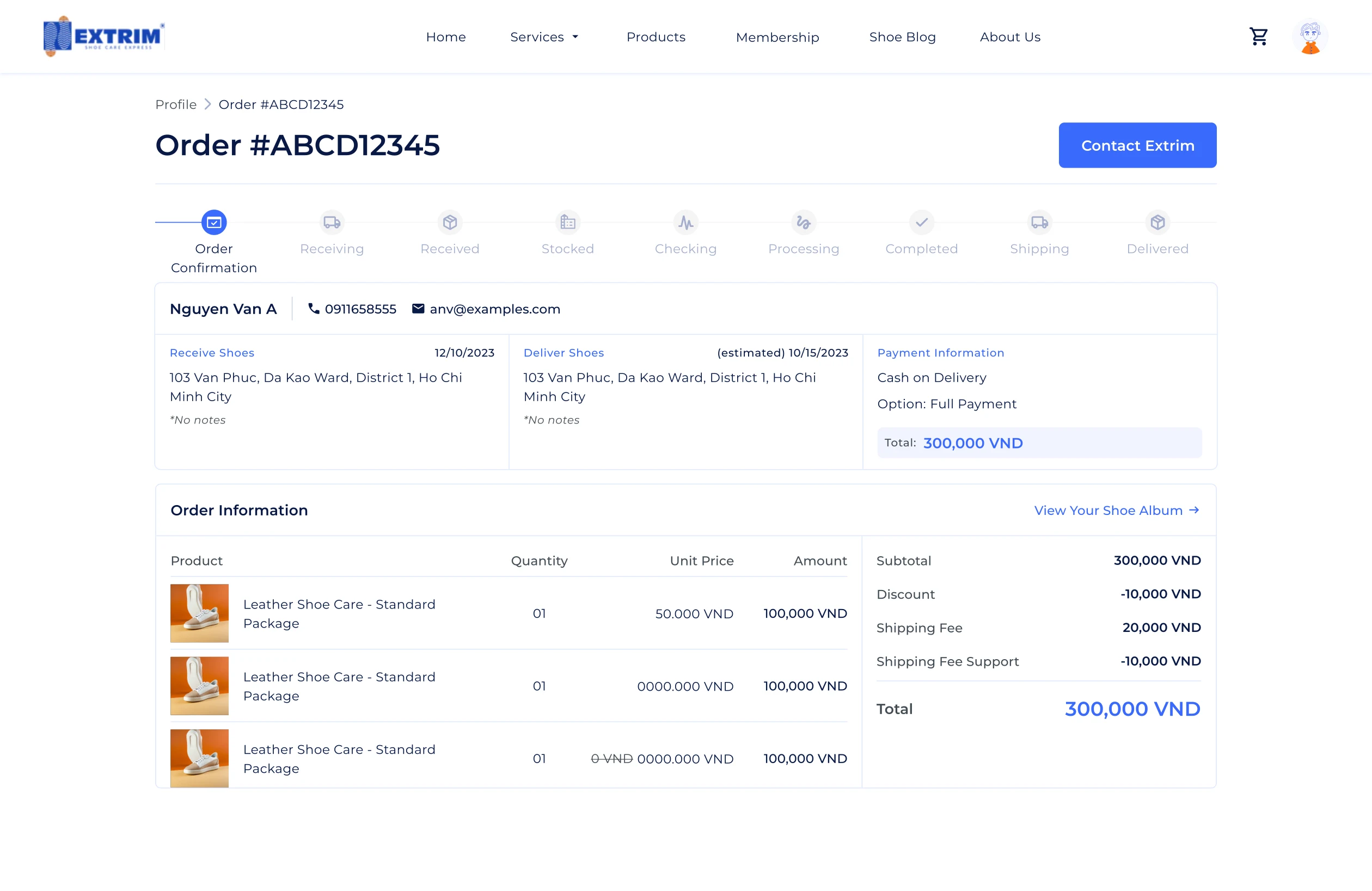
Extrim collects shoes from the customer's address, services them at a branch, and returns them. I placed pickup, service selection, partial deposit, return address, and delivery estimate inside one journey instead of separating the logistics.
The flow carried more state per booking, but customers no longer had to coordinate fulfilment outside the service order.
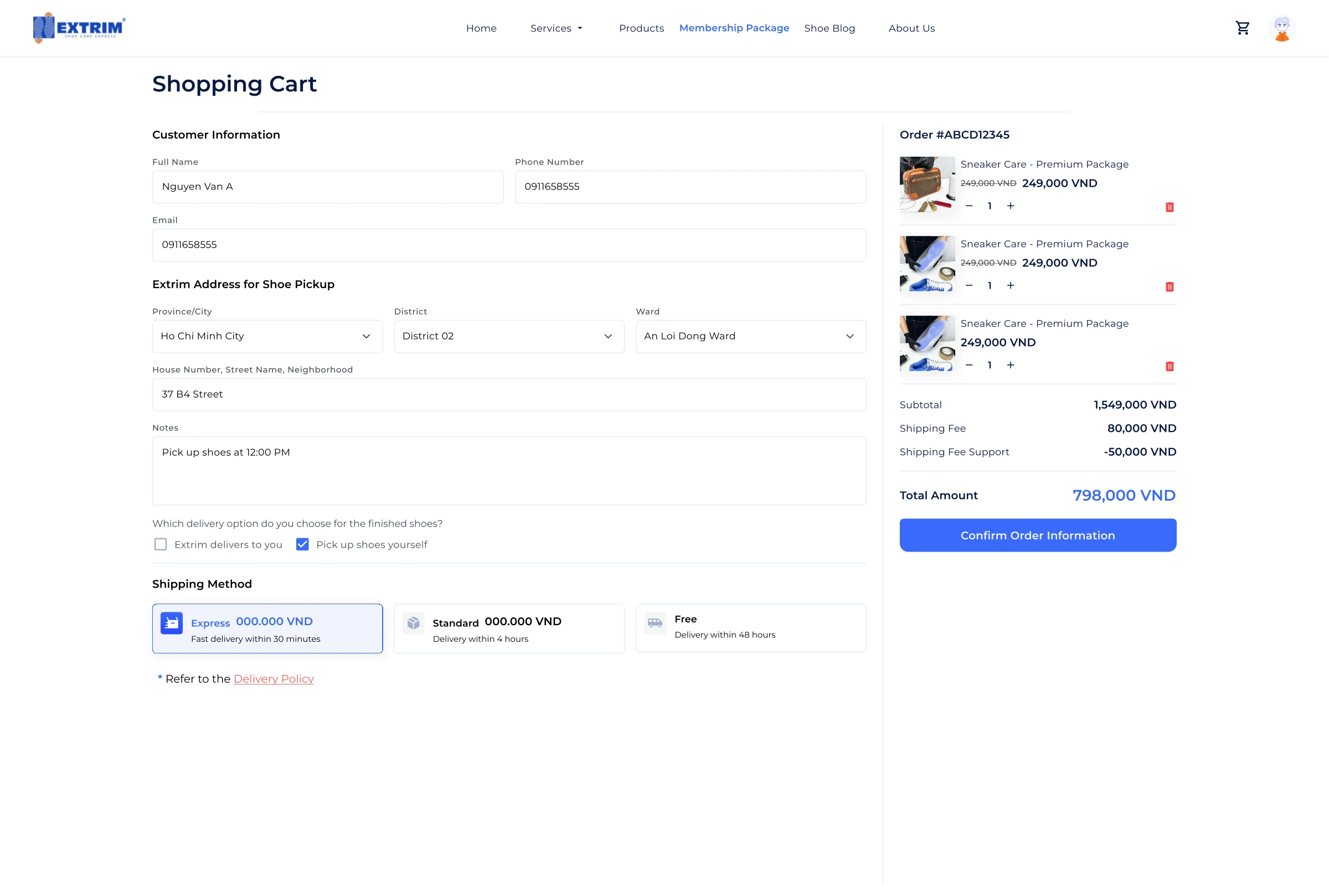
Pickup address
Customer enters the address Extrim should collect the shoes from, plus a pickup window. Saved addresses prefill if returning.
Address · Phone · Pickup window
Services & repair specs
Customer picks the affected region (from Decision #1), selects services, and adds repair notes. Quote updates inline as choices accumulate.
Region · Services · Notes · Quote
Return delivery confirmation
Return address (defaults to pickup), partial deposit, and date estimate confirmed in one screen — booking finalised without re-entering logistics.
Return address · Deposit · ETA
What the customer no longer coordinates separately
Pickup courier scheduling · branch drop-off logistics · return delivery booking. All of it collapses into the same submission as the service order — no second app, no follow-up phone call.
Delivery
I owned the web experience in Figma across service ordering, information hierarchy, the wallet, two-way shipping, partial deposits, and a dashboard for current and past orders. The redesign and new features shipped to production on the existing Extrim.vn platform.
Outcome
The Product Manager reported the +80% conversion result from a before-and-after comparison across the full user base, not an A/B test. The +50% lead-generation result was reported for the wider redesign; the available evidence does not isolate the contribution of an individual design decision.